Arrhythmia Mechanisms · Module 5
ProBradycardia: Sinus Node Dysfunction to AV Block
Mechanisms, ECG patterns and pacing implications.
Clinical summary notes
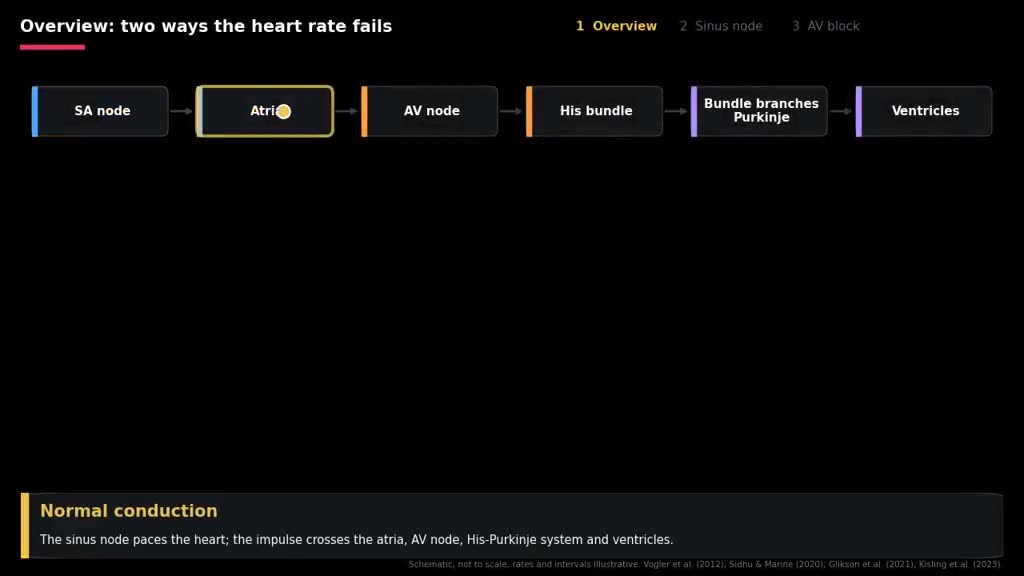
- 1Sinus node dysfunction (SND): abnormal sinus impulse formation or exit. Patterns: sinus bradycardia, pauses or arrest, SA exit block, tachy-brady syndrome and chronotropic incompetence.
- 2Intrinsic causes include fibrosis, degenerative change, ion-channel dysfunction (HCN4/If, SCN5A) and calcium-clock remodeling. Reversible extrinsic causes include beta-blockers, digoxin, some calcium-channel blockers, high vagal tone, hypothyroidism and hyperkalemia.
- 3Symptomatic, non-reversible SND is treated with permanent pacing after symptom-rhythm correlation; the sources do not give a single universal heart-rate or pause cutoff.
- 4First-degree AV block: prolonged PR with 1:1 conduction. Mobitz I (Wenckebach): progressive PR lengthening then a dropped beat, usually AV nodal. Mobitz II: sudden dropped P without PR lengthening, often infra-His, generally a pacing indication.
- 5Third-degree (complete) AV block: atria and ventricles beat independently (AV dissociation) and a slow escape rhythm drives the ventricles. It usually requires permanent pacing.
- 6Level matters: infranodal block is more often associated with wide QRS, lower ventricular rates, worse prognosis and more pacing indications.
Sources
- Hawks et al., Sinus Node Dysfunction (Am Fam Physician)
- Strock (2022), Bradyarrhythmias